


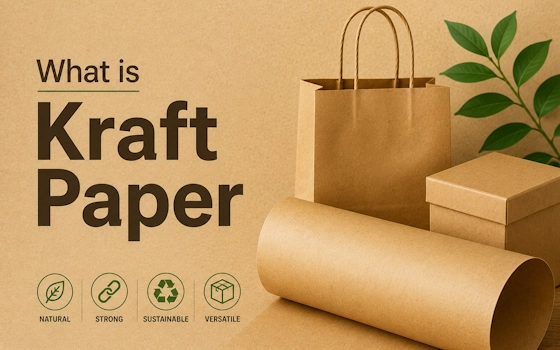
“Kraft” is a German word that means “strong,” which perfectly describes this durable type of paper. It has a natural brown color and high tear resistance. It is widely used for packaging, wrapping, bags, and eco-friendly branding. Kraft paper has become a popular choice for many industries seeking sustainable packaging because it is recyclable, biodegradable, and affordable.
In this article, you will learn about the production process of kraft paper, why you should use it, the difference from regular paper, and more.
Production Process of Kraft Paper
Here’s the step-by-step process of kraft paper production:
Pulping
The Kraft process starts by breaking down wood chips into pulp using chemicals like sodium sulfide. This helps separate the fibers and creates a strong base material.
Screening and Washing
The pulp is then screened to remove any impurities and washed to clean the fibers. This ensures the final paper is smooth and even.
Bleaching (Optional)
Some kraft papers are left natural brown, while others are bleached for a white or lighter look. Bleaching is optional and depends on the final use.
Paper Formation
The cleaned pulp is spread on a moving screen to form thin sheets. Water drains out as the fibers bond together.
Pressing
The sheet then passes through rollers that press out moisture and improve its strength.
Drying
The sheet passes through heated rollers that fully dry the paper and give it stability.
Winding and Cutting
Finally, the dried paper is rolled into large rolls and then cut into sheets or rolls according to customer needs.
Why Should You Use Kraft Paper?
- Versatile: Kraft paper can be used for packaging, wrapping, branding, crafts, and food service. It suits almost any industry.
- Eco-Friendly: It is made from natural fibers and requires fewer chemicals, making it better for the environment.
- Recyclable: Most kraft paper can be recycled and reused, reducing waste.
- Cost-Effective: It is affordable to produce and cheap to customize compared to many other packaging materials.
- Oil and Grease Resistant: Some types of kraft paper have natural grease resistance, making them ideal for food packaging.
Difference Between Kraft and Regular Paper
Here’s the difference between kraft and regular paper:
Strength
Kraft paper is generally stronger than regular paper because the kraft pulping process leaves more cellulose and removes more lignin.
Material
It is made from softwood fibers using the kraft method, while regular paper often uses mixed fibers or recycled pulp.
Color
Kraft paper is usually brown (can be bleached), while regular paper is white or off-white.
Uses
Kraft paper is used for packaging, shipping, bags, wrapping, and branding. Regular paper is used for writing, printing, and light office work.
Printing Techniques on Kraft Paper
Here are some printing techniques that are used on kraft paper:
- Flexographic Printing: Best for large runs; uses flexible plates and quick-drying inks.
- Digital Printing: Great for short runs and customized prints with simple designs.
- Screen Printing: Ideal for bold colors and thick ink layers on kraft paper bags or packaging.
- Offset Printing: Produces high-quality, detailed prints, especially on coated kraft paper.
Types of Kraft Paper
Coated Unbleached Kraft (CUK)
CUK is also called solid unbleached sulfate or SUS. It is a strong brown kraft paper made from virgin fibers and coated to improve print quality and surface smoothness. It consists of 80% virgin fibre wood pulp and is the thinnest kraft paper.
Solid Bleached Kraft Paper (SBS)
SBS is a high-quality white kraft paper made from fully bleached virgin pulp. It gives a smooth, clean, and premium look. It is ideal for high-end and luxury product boxes.
Coated Recycled Board (CRB)
CRB is produced from recycled paper fibers and coated to create a uniform, printable surface. It is often used for folding cartons, lightweight boxes, and eco-friendly retail packaging options.
Thickness of Kraft Paper
- 40–60 GSM: It is thin and lightweight. Used for wrapping, lightweight fillers, and food sheets.
- 70–120 GSM: It has medium thickness. Used for shopping bags, product wraps, and inner packaging.
- 150–200 GSM: It is thick and strong. Used for envelopes, tags, and premium wrapping.
- 200–300 GSM: It is very sturdy. Used for rigid Kraft packaging, sleeves, and small boxes.
Industries that Use Kraft Paper
- Food Industry: Used for food wraps, bakery packaging, sandwich papers, and takeaway bags due to its grease-resistant qualities.
- Retail Industry: Ideal for shopping bags, product packaging, and branded wrapping.
- E-commerce Industry: Used for mailers, wrapping, and protective packaging for shipping.
- Cosmetic and Beauty Industry: Great for premium packaging sleeves, wraps, and eco-friendly boxes.
- Apparel and Fashion Industry: Used for clothing tags, shopping bags, and branded packaging.
- Gift and Craft Industry: Perfect for gift wraps, DIY crafts, hampers, and decorations.
- Stationery and Printing Industry: Used for notebooks, envelopes, folders, and printing projects.
Environmental Impact of Kraft Paper
Kraft paper has a low environmental impact because it uses fewer chemicals and is fully biodegradable. It can be recycled many times and breaks down naturally without harming the environment. Many brands choose kraft paper to support eco-friendly packaging and reduce plastic waste.
Conclusion
Kraft paper is a strong, eco-friendly, and versatile material used across almost every industry. Its durability, sustainability, and affordable cost make it a top choice for modern packaging. Whether you need wrapping, shipping, or premium branding, kraft paper offers a reliable and environmentally responsible solution.
