


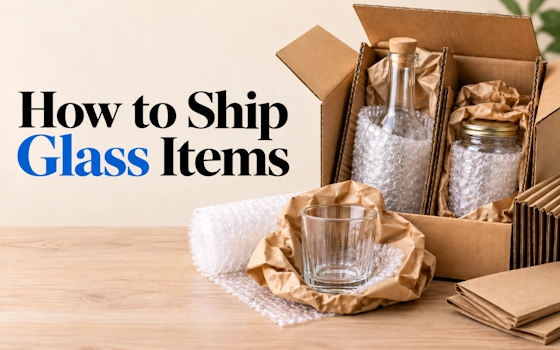
Glassware needs extra protection when packing and shipping because even a small impact can crack or break it. The right box and proper cushioning can help keep glassware safe during delivery. This guide explains how to ship glass items safely.
Follow these steps to reduce the risk of damage during handling and delivery.
Step-by-Step Guide on How to Ship Glassware
1. Choose the Right Box
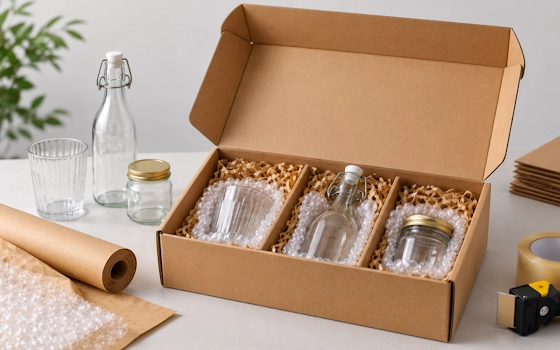
Start with a strong box that can handle the weight of your glass item. The box should be large enough to have space for cushioning but not so large that the product can move around.
Heavy-duty boxes are a good choice for large or heavy glass products. Corrugated cardboard is a great option as it can provide added strength and support during shipping. For multiple glass items, choose a box that gives each item enough space. Do not place glass pieces directly against each other. There should be a protective layer between them.
Check the condition of the box before packing and do not use a box that is crushed, torn, or wet.
2. Wrap Each Item Individually
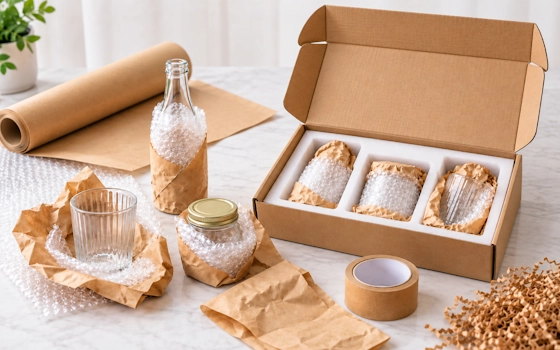
Each glass item should be packed separately for maximum protection. Here’s how to do it right:
- Bubble Wrap It: Wrap each item with at least two layers of bubble wrap. Cover the entire surface and secure the wrap with packing tape. Pay extra attention to thin areas and edges. These parts can break more easily when the box is dropped or pressed during handling. Do not place tape directly on the glass. Use it on the bubble wrap instead so the item is not damaged when the packaging is removed.
- Use Foam Inserts: These inserts can provide another layer of protection for glass bottles and other shaped glass products. They can also help protect areas such as handles and narrow sections. Make sure the foam inserts cover the areas most likely to receive an impact. For glassware with handles, add extra padding around these sections.
3. Cushioning Is Key
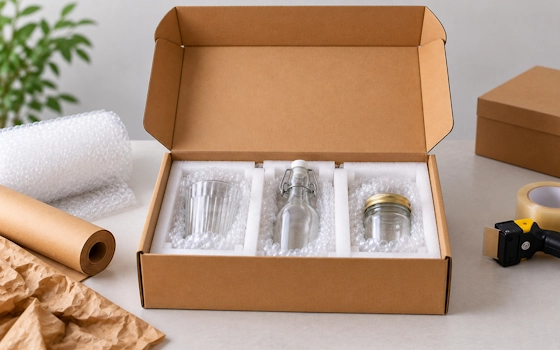
Wrapping the glass is only one part of the packing process. You also need enough cushioning inside the box to absorb impact.
- Fill the Bottom: Start by adding at least two inches of cushioning material to the bottom of the box. You can use packing paper or packing peanuts. It can help reduce the impact if the package is dropped.
- Place and Fill: Carefully place the wrapped glass item inside the box. Keep some space around it for more cushioning. Fill the empty areas with crumpled packing paper or air cushions. Make sure there are no large gaps where the product can shift. The glass should stay in place when the box is moved. If you can hear or feel the item moving inside, then add more cushioning. For multiple items, place cushioning between each piece. You can also use dividers or inserts to create separate sections.
4. Seal the Box Securely with a Fragile Label
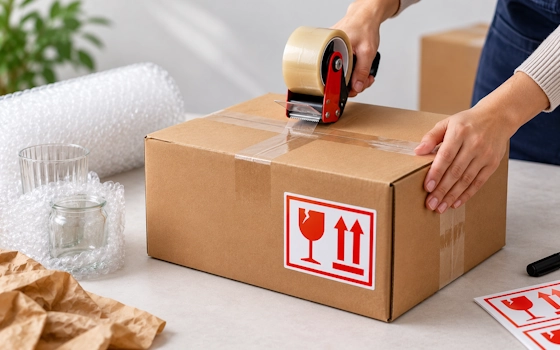
Once the glass item is packed, seal the box properly to keep the products secure during transit. A weak seal can cause the box to open and leave the glass exposed to damage. Follow these steps:
- Use strong packing tape to close all openings.
- Cover the main seams completely with tape.
- Add extra tape to the top and bottom seams.
- Reinforce the corners and other weak areas of the box.
- Check the seal before shipping to make sure it holds firmly.
Clear labeling can help handlers identify boxes that contain glass. Add a “Fragile” or “Handle With Care” label where it can be seen easily. You can place labels on the top and sides of the box. This makes the warning easier to notice from different angles. Even though you are adding labels on the box, the glass still should be packed well enough to handle normal shipping conditions. Also make sure the shipping label is clear and easy to scan. Keep important labels away from seams or corners where they may peel off.
5. Test Before Shipping
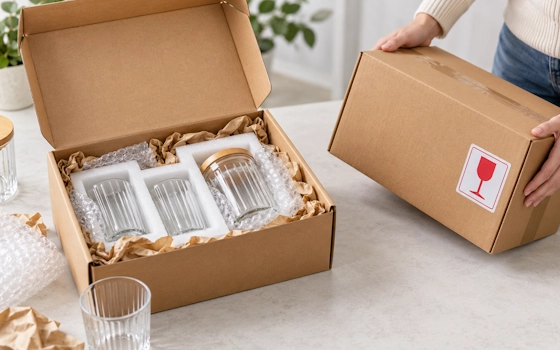
Testing the package before shipping it can help identify weak spots. Gently move the sealed box from side to side. Listen for any movement inside. If the glass shifts, open the box and add more cushioning. The item should remain stable inside the package.
You can also check the outside of the box for weak areas. Make sure all seams are sealed and the box does not bend under normal handling. For valuable or very fragile products, consider using a double box method. Place the protected glass item inside a smaller box. Then place that box inside a larger box with more cushioning around it to ensure your product stays protected.
Conclusion
Shipping glass items starts with choosing durable packaging and using enough cushioning. Wrap every item separately and protect handles, edges, and other weak areas. Fill empty spaces so the glass cannot move inside the box.
For larger or heavier products, durable shipping boxes can provide added support. Inserts and double boxing can offer extra protection when needed. With careful packing and secure sealing, businesses can reduce the risk of damage and help fragile glass items reach customers safely.
