


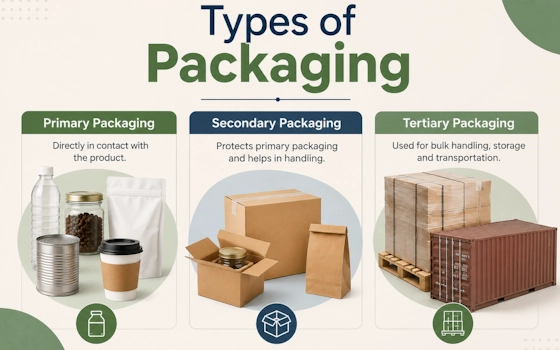
From manufacturing to delivery packaging is an important part of every product. The three major types of packaging are primary, secondary and tertiary. Each type serves a specific purpose in protecting products and improving presentation. They also ensure efficient storage and transportation. This is why understanding how these packaging types work can help businesses choose the right solution. Mostly for product safety, branding and shipping. Let’s explore each type of packaging and its role in the supply chain.
Importance of Packaging in the Supply Chain
Packaging is important in every stage of the supply chain. From production and storage to transportation and final delivery. As it protects products from damage, contamination and handling risks. While making them easier to store and ship efficiently. Moreover, this packaging supports branding by presenting products attractively, helping businesses leave a lasting impression on customers.
Types of Packaging
Packaging is divided into three main types. These are primary, secondary and tertiary packaging. Each type serves a different purpose from protecting the product itself to supporting storage, handling and transportation. Together, these packaging types ensure that products move safely and more efficiently from manufacturers to customers.
What is Primary Packaging?
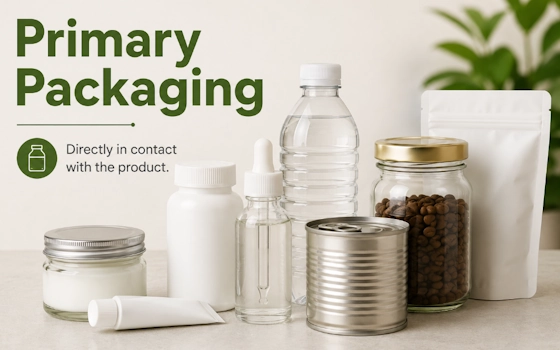
Primary packaging is the first layer of packaging. As it comes into direct contact with a product. It is designed to protect and preserve your items. It keeps your products safe until they reach the consumer. Moreover this packaging also is the main source of product information and is mostly the part customers interact with during everyday use.
Primary packaging is the packaging that directly surrounds a product and protects it from contamination, moisture, damage and other external factors. It includes important details. Such as product labels, ingredients, usage instructions, safety warnings and branding. This will help consumers use the product correctly and safely.
Examples
Primary packaging can include containers, closures, wrappers or protective materials to preserve quality. For example a lotion bottle, its cap and label are all considered primary packaging. As they directly contain and protect the product. The packaging that directly holds and protects a smartphone inside its retail box is also part of the primary packaging.
Some examples of primary packaging include:
- Glass bottles
- Glass jars
- Metal and tin cans
- Protective plastic bags
- Flexible pouches
- Blister packs
- Skin packs
- Protective films
- Food wrappers
- Kraft paper used around food products
Benefits
Here are some of the benefits of primary packaging:
Product Protection: This packaging protects your products from damage, moisture, dust, light and also contamination. Mainly during storage, handling and transportation.
Product Preservation: This packaging maintains freshness, flavor, quality and shelf life of your products by providing effective barrier protection.
Brand Communication: You can add logos, product information, instructions and attractive designs. As it strengthens your brand identity and also informs consumers.
Convenient Usage: Moreover this makes products easier to open, use, store and reseal when you need them.
Better Customer Experience: Lastly it improves product presentation and creates a positive first impression.
What is Secondary Packaging?
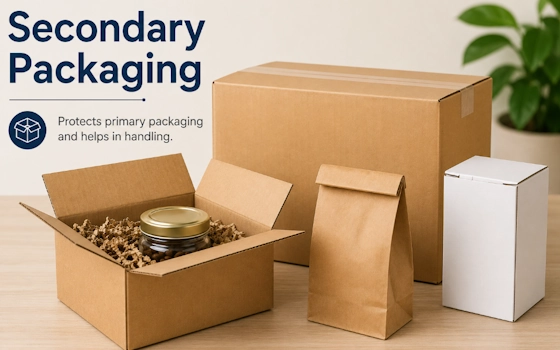
Secondary packaging is the outer layer that groups and protects primary packaged products. Unlike primary packaging, it does not come into direct contact with the product. Instead, it keeps multiple items secure during storage, handling and transportation. While making them easier to organize and distribute.
Moreover, this packaging prevents damage caused by moisture, dust, impacts and rough handling during the supply chain. It simplifies management, palletizing, shipping and retail stocking. It is done by bundling products into convenient units.
In many industries, secondary packaging is also a great branding tool. You can add printed logos, product details, handling instructions, barcodes and promotional graphics to this packaging. This improves product identification and strengthens brand recognition. It is mostly used in industries such as food and beverages, cosmetics, pharmaceuticals, electronics, household goods and consumer products.
Examples
Secondary packaging is mostly the first packaging customers notice when shopping. It protects and presents products. It makes them easier to transport, store, and display. Moreover, it also provides extra space for branding, product information, and promotional messaging.
Some of the most common examples of secondary packaging include:
- Corrugated Boxes
- Paperboard Boxes
- Folding Cartons
- Trays
- Shrink Wrap
- Pouches
- Plastic Bags
- Paper Bags
- Bubble Mailers
- Bubble Wrap
- Gift Boxes
- Display Boxes
Benefits
Here are some of the benefits of secondary packaging:
Sustainability Options: Lastly, they can be produced using recyclable, biodegradable, or eco-friendly materials to support sustainability goals.
Improved Brand Visibility: This packaging provides additional space. So you can print your logos, product information, promotional messages, and eye-catching graphics to strengthen brand recognition.
Improved Product Protection: This also adds a layer of protection against impacts, moisture, dust and damage during storage and transportation.
Efficient Storage and Shipping: It groups multiple products into one unit. This makes handling, palletizing, warehousing and distribution more efficient.
Better Retail Display: Moreover, it keeps products organized and creates attractive packaging. Which improves the shopping experience.
Cost-Effective Logistics: It reduces shipping damage to lower shipping and handling costs.
What is Tertiary Packaging?
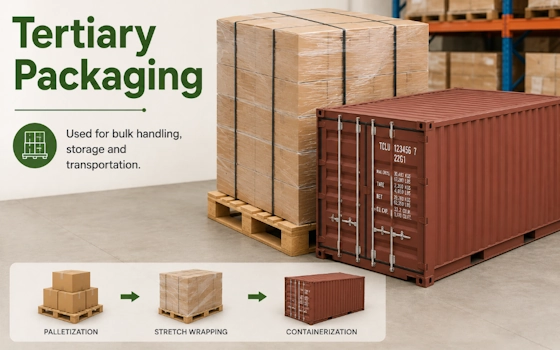
Tertiary packaging is the outermost layer of packaging. Which is used to transport and protect large quantities of products during the supply chain. So this packaging is not made for retail display or direct customer use. But rather it is used to keep products secure during shipping, warehousing and distribution.
This packaging uses multiple secondary packages into a single shipment and makes loading, unloading, handling and transportation more efficient. Moreover tertiary packaging is used by manufacturers, wholesalers, distributors and logistics providers. So they can ship products safely from the production area to warehouses, retailers or directly to customers.
Examples
Tertiary packaging is made to protect and transport bulk shipments safely. It also secures multiple products or secondary packages into a single unit. This makes storage, handling, and distribution more efficient.
Here are some examples of tertiary packaging:
- Corrugated Shipping Boxes
- Wooden Pallets
- Plastic Pallets
- Stretch Wrap
- Shrink Wrap
- Shipping Containers
- Transit Crates
- Bulk Bins
- Protective Corner Boards
- Pallet Straps and Bands
Benefits
Here are few of the benefits of tertiary packaging:
Maximum Product Protection: This packaging protects products and your primary and secondary packaging from impacts, moisture, dust and other factors during transit.
Improved Load Stability: It secures multiple packages on pallets or in shipping containers. Mainly to prevent shifting, tipping and damage during transportation.
Efficient Transportation: Moreover it simplifies loading, unloading, stacking and moving large shipments. As it saves time and labor.
Lower Shipping Costs: Further it reduces handling time and minimizes product damage. It improves space utilization to lower costs.
Safe Long Distance Shipping: Lastly this packaging ensures products remain secure and intact during shipping.
Conclusion
In conclusion, knowing the three major types of packaging is important. This allows businesses to choose the right packaging for their product. They will choose primary packaging if they want to protect the product and interact directly with customers. On the other hand, they will choose secondary packaging to group and present products for retail and distribution. They will choose tertiary packaging to ensure safe bulk shipping and handling. So together, these packaging levels improve product protection and strengthen branding. It also simplifies logistics and improves the customer experience. Selecting the right packaging solutions can reduce costs and deliver products safely and professionally.
