


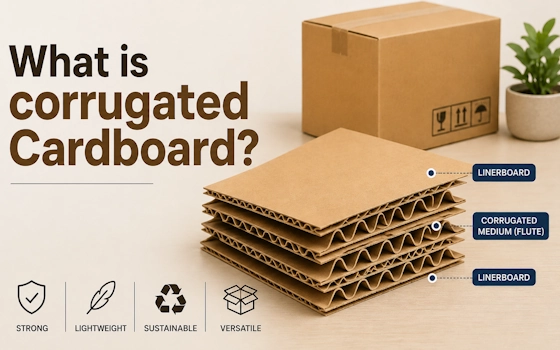
Corrugated cardboard is a strong and durable packaging material. It is made from three main layers: an inside liner, an outside liner, and a fluted (wavy) layer in the middle. The fluted layer adds strength and cushioning, making corrugated cardboard ideal for shipping, storage, and product protection. It is widely used in e-commerce, retail, and industrial packaging because it is lightweight, cost-effective, and eco-friendly.
In this blog, you will learn how corrugated cardboard differs from regular cardboard, what flute types are, and why it’s a great packaging material.
Difference Between Corrugated and Cardboard
Cardboard is a single-layer paper sheet mainly used for folding cartons, product packaging, and retail displays. Corrugated cardboard has multiple layers with fluting inside, creating a much stronger, shock-resistant structure.
In simple words, cardboard is good for lightweight packaging, while corrugated cardboard is best for shipping and heavy protection.
Corrugated Flute Types
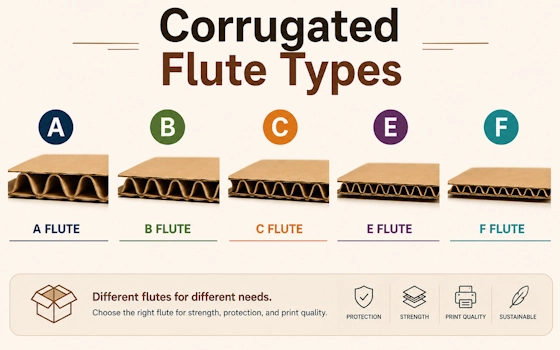
Flutes are the wavy middle layer that gives boxes strength, cushioning, and durability. Each flute type has a different thickness and use.
- A Flute: A Flute has the largest flutes, usually around ¼ inch thick. It gives excellent cushioning and stacking strength. It is ideal for fragile items and heavy-duty shipping boxes.
- B Flute: B Flute has thin flutes, usually around ⅛ inch. It offers good crush resistance. It is often used for retail packaging, die-cut boxes, and displays.
- C Flute: C Flute is the most common flute type for shipping boxes, usually 3/16 inch. It provides a good balance of strength, cushioning, and cost.
- E Flute: E Flute is thin and smooth, usually around 1/16 inch. It’s great for printing and product packaging. It is used for cosmetics, electronics, and retail boxes.
- F Flute: F Flute is even thinner than E Flute, usually 1/32 inch. It is used for small product packaging that needs sharp printing and a sleek look.
Different Combinations of Flutes
Some boxes use two flute types for added strength and performance.
- AB Flute: A combination of A and B flutes. Strong and ideal for shipping heavy or fragile items.
- BC Flute: A mix of B + C flutes. This is a popular choice for double-wall corrugated boxes used in logistics and bulk packaging.
- EB Flute: A combination of E + B flutes. It offers strength from the B flute and smooth printing from the E flute, perfect for retail and display packaging.
Types of Corrugated Cardboard
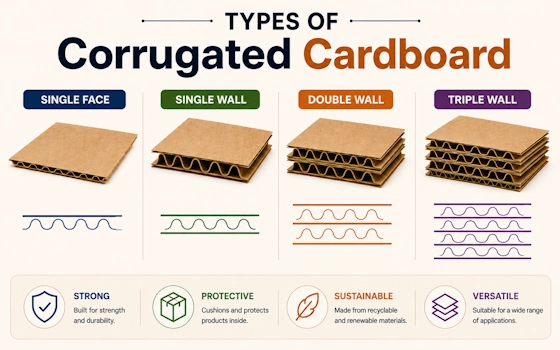
- Single Face: This has one liner and one fluted layer. It is flexible and mainly used as protective wrapping, padding, or inner cushioning.
- Single Wall: The most common type. It includes one fluted layer placed between two liners. Used for everyday shipping boxes.
- Double Wall: Made with two fluted layers and three liners. It offers high strength and is used for heavy products, bulk shipments, or industrial packaging.
- Triple Wall: The strongest type has three fluted layers and four liners. It is used for large and heavy-duty shipments like machinery or automotive parts.
Why Choose Corrugated Cardboard?
Corrugated cardboard is one of the most reliable packaging materials because it offers:
- High strength and protection for fragile and heavy products
- Shock absorption during shipping
- Lightweight design that reduces shipping costs
- Eco-friendly and recyclable materials
- Cost-effectiveness for bulk and regular shipments
- Easy customization with printing, branding, and size adjustments
Whether you run an e-commerce store or a retail brand, corrugated cardboard protects your products and provides an effective packaging solution.
