



Shipping clothes is a common part of running an online clothing store. No matter if you sell shirts, jeans, dresses, or delicate garments, each order needs suitable packaging to reach customers in good condition. Poor packaging can expose clothes to wrinkles and damage during handling.
This guide explains how to ship clothes and choose suitable packaging, as well as compare shipping services, calculate shipment weight, and prepare international orders.
Factors to Consider When Shipping Clothes
Before packing an order, you need to consider the product and its packaging along with shipping costs. These factors help you select the right materials and delivery service for each shipment.
Packaging and Marketing
Packaging protects clothing during transit, but it also affects how customers view your brand. Custom apparel boxes may work for shipping clothing neatly, whereas a branded box can provide a more considered presentation for premium apparel. It improves the unboxing experience.
Choose packaging based on the type of garment and the experience you want to create. Tissue paper with branded stickers and printed boxes can add a personal touch to an order.
Packaging and Presentation
The packaging should fit the clothing without leaving too much space. Shirts and lightweight garments may only need a suitable poly mailer bag, whereas jackets and dresses, along with multiple clothing items, may require a sturdy box.
Consider the material and structure of the box before making a choice. Mailer boxes provide a durable shipping experience and are useful for clothing orders that need extra protection. A properly sized box also prevents garments from shifting during transit.
Shipping Rates
Shipping rates depend on several factors. Including package weight, dimensions, destination and delivery speed. Carriers may also use dimensional weight when calculating the price. This means a large but lightweight box can cost more to ship than expected.
Compare different carrier services before choosing one. Check the delivery estimates and additional charges as well as the base rate. Selecting suitable packaging can also control costs by avoiding unnecessary package weight and size.
Process to Ship Clothes to Your Customers
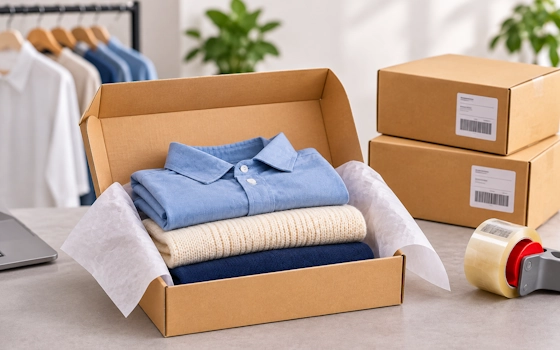
Once the clothing is packed, choose a shipping service based on the package size, weight, destination, and delivery time. USPS, FedEx, and UPS offer domestic shipping options for different types of parcels.
Shipping Clothes through USPS
USPS is a suitable choice for sending lightweight clothing packages. You can benefit from volume discounts and choose flat-rate shipping for heavier orders or deliveries going to distant locations.
USPS provides several delivery services. However, First Class Mail and Priority Mail are the most relevant options for clothing shipments.
First Class Mail shipping
First Class Mail is the cheapest option for lightweight packages weighing 13 ounces or less. If your clothing orders usually fall within this weight range, it can be a cost-effective choice for most shipments.
Shipping charges depend on the delivery distance. You can use your ZIP code and check the USPS Domestic Zone Chart to understand how the distance affects the cost.
Priority Mail shipping
Priority Mail offers flat-rate shipping for packages weighing over 13 ounces. Deliveries usually take 1 to 3 business days, and the maximum package weight is 70 lbs. The shipping cost depends on package dimensions, weight, or delivery distance. USPS also provides variable pricing for time-sensitive deliveries.
Shipping Clothes through FedEx
FedEx is another option for shipping clothing orders. It provides several services, including flat-rate shipping, freight shipping, same-day delivery, and overnight shipping.
The shipping price depends on package weight, delivery distance, and the service you choose.
- Flat-rate shipping: This option is available for packages weighing 50 lbs or less. It is the cheapest option, and the package weight does not affect the price as long as it stays under 50 lbs.
- Freight shipping: This service is suitable for packages weighing more than 150 lbs.
- Same-day delivery: This option is useful for time-sensitive packages that need to reach destinations across the country within hours.
Shipping Clothes through UPS
UPS is another carrier you can consider when you need flexibility in shipping. It offers different pricing options based on your package and delivery requirements.
You can enter the package weight, delivery distance, and shipping speed to calculate the cost. This option is useful for special clothing items like wedding dresses that may not have standard package weights.
UPS Flat Rate shipping allows packages weighing up to 50 lbs per box. Delivery takes 1 to 5 days. You can use your own packaging and choose from five options based on package weight.
What is the Cheapest Way to Ship Clothes?
Choosing the cheapest way to ship clothes depends on the number of items, delivery speed and shipping distance. Compare rates from different carriers using their online calculators to find the most affordable option.
USPS First Class Mail is the cheapest choice for lightweight clothing packages. However, it does not offer customer tracking, and delivery timeframes can be unpredictable.
For heavier packages, consider flat-rate shipping options. These can accommodate packages weighing up to 70 lbs, and you may also get discounts when shipping in large volumes.
Saving Money With Your Packaging
Packaging choices can affect the total cost of shipping clothes. Large boxes and unnecessary fillers increase box dimensions and may raise the shipping price.
Here are a few ways to manage packaging expenses:
- Choose the right package size: Avoid oversized boxes when a smaller mailer or box can hold the clothing securely.
- Use lightweight materials: Tissue paper and suitable protective bags add little weight compared with heavier packaging materials.
- Combine clothing orders: When customers purchase multiple garments, pack them together if the package remains within the carrier’s size and weight limits.
- Compare packaging options: Mailer bags may work for lightweight clothes whereas boxes are more suitable for orders that need additional structure.
- Consider branded packaging: Use printing and other design details where they add value to the customer experience without making the box unnecessarily heavy.
The goal is to balance protection and presentation as well as shipping expenses.
How to Determine Shipment Weight
The weight of your package affects the total shipping cost along with its size and destination. Getting the weight right helps you avoid incorrect shipping estimates and extra charges. You can use these two simple methods to weigh clothing packages:
- Use a kitchen scale: Weigh smaller packages containing single shirts, tops, or lightweight garments.
- Use a bathroom scale: Weigh larger packages containing multiple jeans, jackets, or other heavier clothing items.
Make sure to weigh the complete package after adding all packing materials and the box.
Factors to Consider When Shipping Clothes Internationally
International clothing orders need additional preparation because packages must meet the shipping and import requirements of the destination country. Before sending an order, check the following details.
The Destination of Your Shipment
The destination affects the available shipping services, delivery time, and total cost. Some countries have limited delivery options, whereas others may require additional customs checks.
Confirm that your selected carrier delivers to the recipient’s location. Check the estimated transit time and make sure it suits your customer’s expectations. You should also provide the correct recipient address and contact details to prevent delivery problems.
Country Rules and Regulations
Different countries have their own rules for importing clothing and textile products. Check whether the destination has restrictions on particular materials or textile products. If you are sending branded clothing, make sure the items meet the destination country’s import requirements. Review the current rules before dispatching the order.
Customs Paperwork
International clothing shipments usually require a customs declaration. The form should describe the contents accurately and include the required shipment details.
Depending on the carrier and destination, you may need a commercial invoice or other supporting documents. Include details such as the item description, quantity, value, and country of origin when requested. Accurate paperwork helps customs authorities identify the shipment and assess any applicable charges. Do include information like buyer, shipper, invoice, shipment date, and more.
Duties and Taxes
International shipments may be subject to customs duties, import taxes, and other charges. The amount depends on the destination country’s rules, the declared value, and the type of clothing.
Check whether the sender or recipient will be responsible for these charges. Some carriers offer services that allow duties and taxes to be paid in advance whereas others may collect them from the recipient. Explain any possible charges to customers before they place an order.
International Shipping Label
An international shipping label contains the sender’s and recipient’s details along with the shipment information. Make sure the names, addresses, postal codes and contact numbers are accurate.
The label should match the information on the customs declaration and commercial invoice. Attach it to a clear, flat surface of the package so it remains visible during handling. Follow the carrier’s instructions for attaching any additional customs documents.
International Shipping Options
Carriers offer different international services based on delivery speed, destination and package weight. USPS, FedEx and UPS provide options for sending clothing to various countries.
USPS offers services such as Priority Mail International and Priority Mail Express International. FedEx and UPS also provide international express and economy options. It depends on the destination.
Compare the delivery estimates and tracking availability as well as rates and customs support before choosing a service. For time-sensitive clothing orders, a faster service may be suitable. For less urgent shipments, compare economy options to manage costs.
Conclusion
Shipping clothes requires suitable packaging and a delivery service that matches the order. Fold clothes carefully and protect them from wrinkles and damage. Choose mailer bags or sturdy boxes based on the clothing type and quantity.
Compare carrier rates using the complete package weight and dimensions. For international orders, check destination rules and prepare customs paperwork as well as account for possible duties and taxes. With the right packing method and shipping service, you can prepare clothing orders for delivery while managing packaging costs and protecting the customer experience.
