


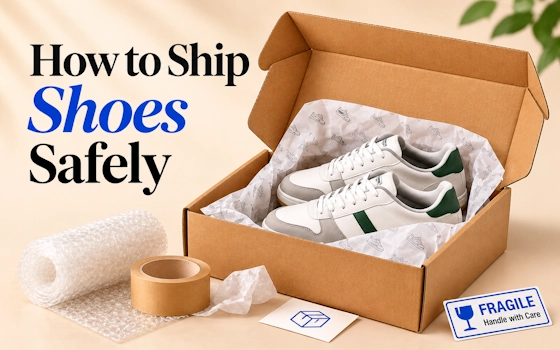
Shipping shoes safely starts with choosing the right packaging. Sneakers, boots, heels, and other footwear need proper protection to prevent damage before they reach customers. The right packing method also helps control shipping costs and keeps orders presentable.
This guide explains how to prepare shoes for shipping. It covers suitable packaging materials and packaging methods, as well as carrier costs and ways to ship different types of footwear.
A Simple Guide to Packaging Shoes for Shipping
1. Select a Suitable Box
Start by choosing a box according to the size and type of footwear. A box that is too large allows shoes to move around, whereas a tight fit can put pressure on them. Consider these options:
- Corrugated Boxes: These boxes are sturdy and lightweight. They are suitable for shipping different types of footwear and can be made in sizes that fit your products.
- Rigid Boxes: These provide a durable structure and a premium presentation for high-end shoes.
- Reusable Bags: These can be used for lightweight footwear such as sandals and flats.
Avoid using oversized boxes because they need more filler material and may increase shipping costs. Corrugated boxes for shoes are a practical choice when extra structure is needed during transit.
2. Add Protective Inserts
Place foam inserts or tissue paper inside the box to keep the shoes in position. These materials prevent unnecessary movement and protect delicate footwear from damage. They are useful for high heels and shoes made from soft materials such as suede.
Foam inserts and dividers can also keep each shoe in its place. This creates a more organized arrangement inside the box.
3. Fill Empty Spaces
After placing the shoes inside, use crumpled packing paper, bubble wrap, or air cushions to fill the remaining space. This limits movement and absorbs some impact during handling. Biodegradable packing peanuts can also be considered as an alternative protective material.
4. Close and Seal the Box
Use strong packing tape to secure the box before shipping. Cover the opening and reinforce the edges and seams so the package stays closed during handling. Check the seal carefully before preparing the shipping label.
How to Ship Shoes Without Their Original Box
Some businesses may choose to send footwear without its original shoe box. This can work for lightweight and less delicate items such as flip-flops or canvas sneakers. However, the shoes still need a protective layer.
1. Choose Poly or Bubble Mailers
Poly mailers and bubble mailers are options for lightweight footwear. They take up less space and can reduce packaging costs. Select a mailer that provides enough space for the shoes and any protective wrapping.
2. Wrap the Shoes Before Packing
Without a shoe box, footwear has less protection against scratches and pressure. Wrap each shoe with bubble wrap or foam before placing it inside the mailer. Make sure both shoes are cushioned properly to reduce direct contact and prevent damage.
3. Use Reusable or Recycled Materials
Reusable cloth bags and recycled packaging materials are other options for sending shoes. These can be considered when choosing alternatives to conventional packaging materials.
Packaging Methods for Different Types of Shoes
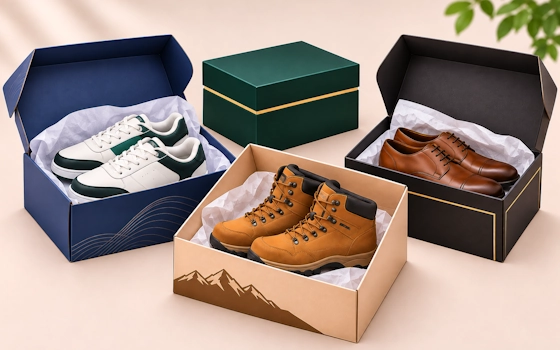
The packaging method should match the footwear being shipped. Sneakers, dress shoes, and boots have different shapes and protection needs.
- Sneakers: Valuable and collectible sneakers need extra care. Place them in a sturdy corrugated box with tissue paper or foam inserts. For collectible pairs, put the original shoe box inside a larger shipping box for added protection.
- Dress Shoes: Wrap leather and other delicate dress shoes separately to prevent scratches and scuffs. Rigid boxes with foam padding or dividers can keep them secure.
- Boots: Boots take up more space and can be heavier than other footwear. Use a larger box to support their weight. Custom sizes can also be made according to the dimensions of the boots.
How Much Does It Cost to Ship Shoes?
The cost of shipping shoes depends on package weight and dimensions, along with delivery distance. The shipping service you select also affects the final price.
- Weight: Sandals and flats are usually lighter than boots. Weigh the complete package to get a more accurate shipping estimate.
- Dimensions: Large packages may have higher dimensional weight charges. Choosing a suitable box size can avoid unnecessary costs.
- Shipping Service: Standard ground services are often more affordable than express delivery. International shipments can also cost more depending on their destination.
Small and medium-sized businesses can expect to pay around $7 to $10 for domestic shoe shipping. International delivery may cost more depending on the destination and package weight.
Benefits of Using Customized Shoe Packaging
The way shoes are packed can influence how customers perceive a brand. Well-designed packaging also gives businesses a consistent way to present their footwear.
- Brand Recognition: Printed designs, logos, and brand colors help customers identify your business.
- Product Protection: Suitable box sizes and protective inserts keep footwear secure during transit.
- Sustainability: Recycled and reusable materials provide alternatives for businesses looking to reduce packaging waste.
Custom shoe boxes can be made in different styles and materials to suit various footwear products. For online orders, shoe packaging for e-commerce provides protection and also keeps the shoes well-presented for delivery.
Conclusion
Shipping shoes involves choosing suitable packaging and preparing shoe pairs for transportation. Use a box that matches the footwear size and add protective materials to prevent movement. Consider the weight and dimensions of the complete package when comparing shipping services. These steps help businesses prepare shoe orders for delivery while protecting the products and keeping packaging costs manageable.
